
Dental Implants: Restoring Function, Bone Health, and Confidence
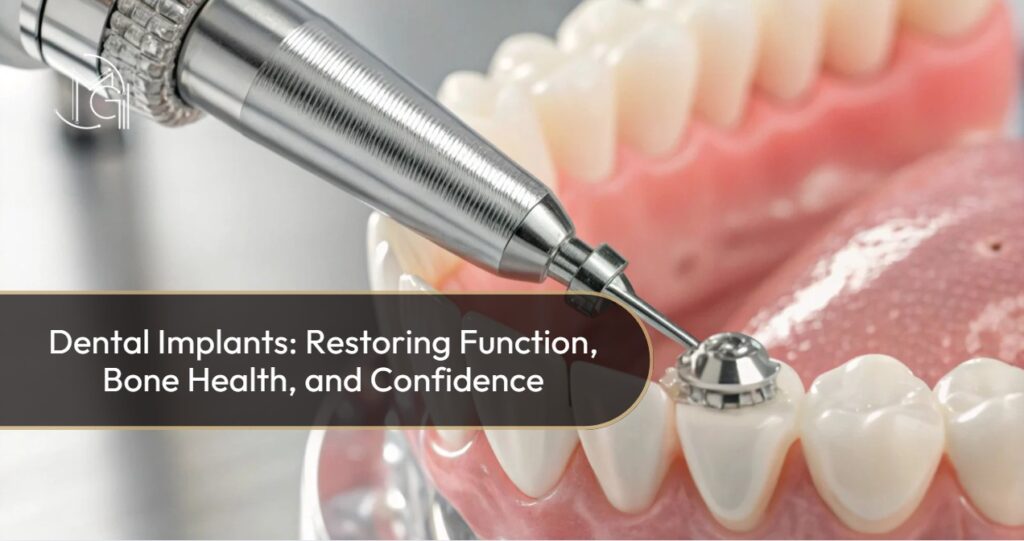
There is a quiet moment I often witness in my practice when patients begin to consider Dental Implants. They chew on only one side, smile with hesitation, avoid certain foods, and sense that something about their face no longer feels the same. They may not always express it clearly, but they feel it deeply: losing a tooth affects far more than appearance. It alters daily function, confidence when speaking, bite stability, and—over time—the bone structure that supports the face. This subtle discomfort, combined with the frustration of “not feeling like yourself,” is often what brings patients to my office seeking a lasting solution.
I am Carolina Gil, an oral and maxillofacial surgeon, and my approach to Dental Implants is guided by a fundamental principle: we do not treat isolated teeth, we treat bone health, functional balance, and long-term oral stability. From a surgical perspective, placing an implant is never just about restoring what is visible. It is about preserving what sustains your oral health beneath the surface.
Unlike treatments focused solely on aesthetics, my maxillofacial approach prioritizes bone preservation, precise bite alignment, and long-term safety. When Dental Implants are properly indicated and carefully planned, they do much more than replace a missing tooth. They help prevent progressive bone loss, reduce the risk of adjacent teeth shifting, and support facial structure as time passes.
Table of Contents
Dental Implants Explained: What They Are, How They Work, and Who They’re For
When I explain Dental Implants to my patients, I like to keep it simple and medically accurate. A dental implant is a system made of three essential components that work together to replace a missing tooth in the most natural way possible:
- The implant: a small titanium post that is placed into the jawbone and acts as an artificial root.
- The abutment: the connector that links the implant to the visible tooth.
- The crown: the custom-made tooth that restores shape, function, and aesthetics.
What Dental Implants are not is equally important. They are not removable, they do not rely on neighboring teeth for support, and they do not sit on top of the gums like traditional dentures.
When we compare Dental Implants with bridges or removable dentures, the differences become very clear. Bridges require grinding down healthy adjacent teeth, which can compromise them over time. Removable dentures may feel unstable, affect speech, and accelerate bone loss in the jaw. In contrast, Dental Implants integrate with the bone, provide excellent stability, and allow for easier hygiene—very similar to caring for natural teeth.
From a functional standpoint, the result feels natural. Patients regain efficient chewing, clearer speech, and, just as importantly, the confidence to smile without hesitation.
Who Is a Good Candidate for Dental Implants?
One of the most common questions I receive is whether someone is a candidate for Dental Implants. The good news is that this treatment can be adapted to many situations when properly evaluated.
Dental Implants are ideal for patients who:
- Are missing a single tooth
- Have lost several teeth
- Need full-arch rehabilitation with fixed teeth
However, candidacy is not defined by tooth loss alone. As an oral and maxillofacial surgeon, I carefully evaluate several health factors that directly influence long-term success:
- Gum health and the presence of periodontal disease
- Available bone volume and density
- Smoking or vaping habits
- Uncontrolled systemic conditions such as diabetes
- Bruxism or clenching habits
Here is where a maxillofacial perspective becomes critical. Bite dynamics and parafunctional habits, such as clenching or grinding, place additional forces on implants. This means treatment planning is never “one-size-fits-all.” Each case requires a personalized analysis to ensure stability, longevity, and safety.
The Part Most Websites Don’t Explain Well: Bone Preservation and Facial Support
What many people don’t realize is that tooth loss triggers a biological process called bone resorption. When a tooth root is no longer present, the jawbone begins to lose volume because it is no longer being stimulated.
This is one of the main reasons I often recommend Dental Implants over other solutions. Because the implant integrates directly with the bone, it helps preserve bone structure, maintain facial support, and prevent the sunken appearance that can develop over time.
In cases where bone volume is limited, additional procedures may be necessary, such as:
- Bone grafting
- Ridge preservation
- Sinus lift surgery
These procedures are not complications—they are planning tools. When performed correctly, they significantly improve predictability, implant stability, and long-term results.
The Implant Journey Map: Options, Planning, Procedure, and Recovery
This is where I like to offer patients something different from what they usually find online: a clear, step-by-step pathway that explains how Dental Implants are planned and performed from a medical perspective.
Step 1 - Precision Diagnosis (The Foundation of Long-Term Success)
Every successful implant treatment begins with an accurate diagnosis. During your evaluation, I combine a detailed clinical examination with advanced imaging, such as CBCT or 3D scans when indicated.
My focus is always functional first. I assess:
- Your bite and occlusion
- Gum quality and soft tissue health
- Available space for the final crown
- Bone anatomy and proximity to vital structures
With this information, I design a treatment plan that aligns with your goals—whether that means discreetly replacing a single tooth or restoring a full, confident smile with fixed teeth.
Step 2 - Choosing the Right Type of Dental Implants for Your Case
Not all implant treatments are the same. Based on your diagnosis, we may consider:
- A single dental implant to replace one missing tooth
- An implant-supported bridge for multiple missing teeth
- Full-arch dental implants, where a fixed set of teeth is supported by strategically placed implants
Some patients ask about “same-day teeth.” In certain cases, immediate loading is possible. However, there are situations where a staged approach is safer and more predictable. My role is to guide you toward the option that best protects your health and long-term outcome.
Step 3 - The Procedure: What Actually Happens During Implant Surgery
Implant surgery is far more controlled and comfortable than many patients expect. Depending on the case, I may use local anesthesia alone or combine it with sedation to ensure comfort.
The procedure follows strict surgical principles:
- Atraumatic technique to protect bone and soft tissue
- Sterile protocols for maximum safety
- Precise implant placement based on pre-surgical planning
Minimally traumatic surgery matters. It directly influences post-operative swelling, pain control, and the quality of healing. When tissues are respected, recovery is smoother and results are more predictable.
Step 4 - Healing Timeline and What to Expect After Dental Implants
Healing after Dental Implants occurs in phases:
- Early healing of soft tissues
- Osseointegration, where the implant fuses with the bone
- Placement of the final crown
Most patients experience mild swelling and well-controlled discomfort. Temporary dietary adjustments are usually necessary during early healing.
Aftercare is essential and includes proper hygiene, scheduled follow-ups, and, in some cases, the use of protective bite guards—especially for patients with bruxism. These measures are key to protecting your investment and ensuring long-term success.
Why Choose Dr. Carolina Gil for Dental Implants in Bogotá
Choosing Dental Implants is not just about replacing a missing tooth; it is about placing that implant with surgical precision and long-term vision. With more than 20 years of experience in oral and maxillofacial surgery, I plan every implant treatment from a surgical perspective, prioritizing safety, predictability, and functional stability. This background allows me to manage complex situations that require more than a generic approach, such as advanced extractions, bone management, sinus-related anatomical considerations, and comprehensive functional rehabilitation.
From the very first evaluation, my patients follow a clear and guided process that includes diagnosis, personalized planning, surgery, recovery, and long-term maintenance. I believe that understanding the treatment is part of successful care, which is why I explain each step in a clear and straightforward way, without unnecessary technical language. When patients know what we are doing and why, they feel more confident and actively involved in their implant journey.

For international patients, I offer a structured and reliable medical tourism experience, with options for virtual pre-evaluation, efficient scheduling, and coordinated guidance during their stay in Colombia. If you are considering Dental Implants, the safest first step is a specialist evaluation that allows us to design the right plan for your bone, your bite, and your long-term goals.
Frequently Asked Questions About Dental Implants
1. What exactly are Dental Implants and how do they replace a missing tooth?
Dental Implants are a long-term solution designed to replace both the root and the visible part of a missing tooth. The implant itself is a titanium post placed into the jawbone, where it integrates naturally with the bone. Once healing is complete, a custom crown is attached, restoring function and appearance. This system closely mimics a natural tooth, allowing patients to chew, speak, and smile with confidence.
2. Are Dental Implants painful during or after the procedure?
Most patients are pleasantly surprised by how comfortable the process is. Implant surgery is performed under local anesthesia, and in some cases sedation can be used for additional comfort. After the procedure, it is normal to experience mild swelling or discomfort, which is usually well controlled with prescribed medication. Compared to other dental procedures, recovery is often smoother than expected.
3. How long does the Dental Implants treatment process take?
The timeline depends on individual factors such as bone quality and whether additional procedures are needed. In general, treatment includes implant placement, a healing phase for bone integration, and final crown placement. While some cases allow for immediate restoration, others require several months to ensure long-term stability. The goal is not speed, but predictability and safety.
4. Am I a good candidate for Dental Implants?
Many patients are candidates for Dental Implants, whether they are missing one tooth, several teeth, or an entire arch. However, factors such as gum health, bone availability, smoking habits, systemic conditions like diabetes, and clenching or grinding habits must be evaluated. A thorough examination is essential to determine the safest and most effective treatment plan.
5. What happens if I don’t have enough bone for Dental Implants?
Lack of bone does not automatically disqualify you from implant treatment. In many cases, procedures such as bone grafting, ridge preservation, or sinus lift surgery can be performed to rebuild adequate support. These techniques are commonly used in implant dentistry and significantly improve long-term success when properly planned.
6. How long do Dental Implants last?
With proper planning, correct placement, and good oral hygiene, Dental Implants can last many years and often decades. Regular dental check-ups, professional cleanings, and good home care are essential to protect both the implant and surrounding tissues. Lifestyle factors such as smoking and untreated bruxism can affect longevity and must be managed appropriately.
7. Are Dental Implants better than bridges or removable dentures?
In many cases, yes. Dental Implants do not require altering healthy neighboring teeth, provide superior stability, and help preserve jawbone structure. Bridges and removable dentures can be effective in certain situations, but they do not offer the same level of bone preservation or long-term function as implants.
8. Can Dental Implants fail?
While implant success rates are very high, no medical procedure is entirely without risk. Implant failure can occur due to infection, poor bone integration, smoking, uncontrolled systemic conditions, or excessive bite forces. Careful diagnosis, precise surgical technique, and proper follow-up greatly reduce these risks.
9. What kind of care do Dental Implants require after placement?
Implants require daily hygiene similar to natural teeth, including brushing and flossing. Regular professional cleanings and follow-up appointments are essential to monitor bone and gum health. For patients who clench or grind their teeth, protective night guards may be recommended to prevent excessive forces on the implants.
10. How do I know if Dental Implants are the right solution for me?
The best way to determine if Dental Implants are right for you is through a comprehensive evaluation with a qualified specialist. This allows for a detailed assessment of your bone, bite, oral health, and personal goals. With the right diagnosis and planning, implants can offer a safe, functional, and long-lasting solution tailored specifically to your needs.